

Quantum Computing: A Beginner’s Guide to the Future of Computation
Quantum computing is one of the most exciting and rapidly evolving areas in modern science. It represents a major shift from traditional computing by leveraging the strange and powerful rules of quantum mechanics to solve problems that are currently beyond the reach of classical computers.
What is Quantum Computing?
Quantum computing is an emerging field of computational science that applies the principles of quantum mechanics at the microscopic (quantum) level.
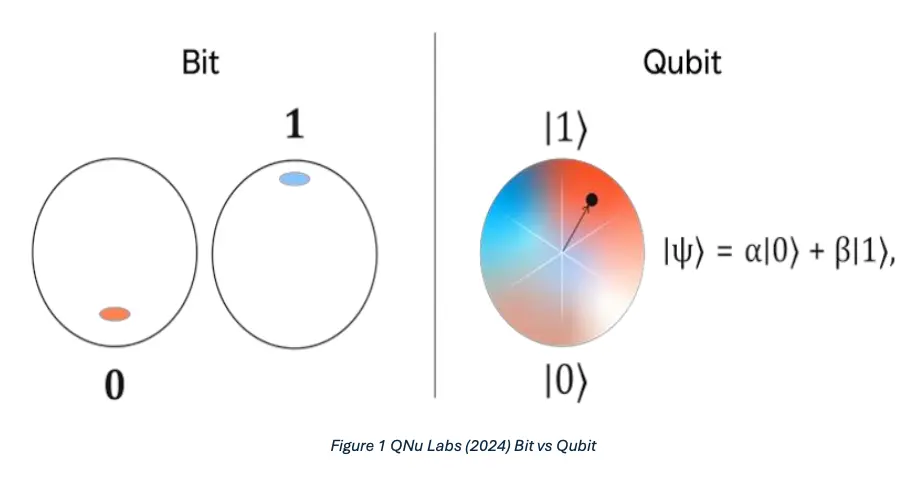
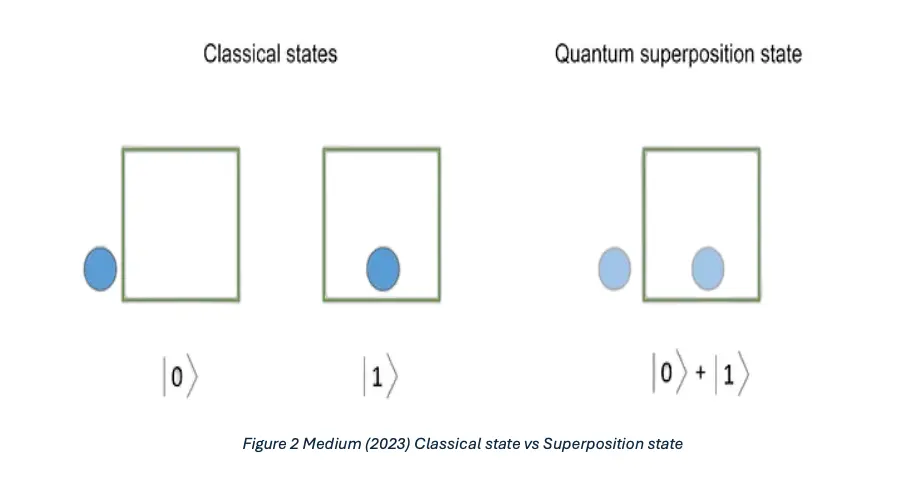
Unlike classical computers, which use bits (0 or 1), quantum computers use qubits. These qubits can represent both 0 and 1 at the same time, enabling far more complex and powerful computations.
The core principles that make quantum computing unique include: • Superposition • Entanglement
These properties allow quantum computers to process massive combinations of possibilities simultaneously, making them potentially far more powerful for certain tasks.
Fundamental Principles of Quantum Computing
1. Entanglement
Entanglement is a quantum phenomenon where the state of one qubit becomes directly linked to the state of another, no matter how far apart they are.
This means that measuring one entangled qubit instantly affects the other, enabling highly coordinated and powerful computational processes.
2. Quantum Gates
Quantum gates are the building blocks of quantum circuits. They manipulate qubits in a way similar to how logic gates (AND, OR, NOT) operate in classical computing.
However, quantum gates work on quantum states and can create entirely new possibilities of computation.
Key Examples: • Pauli-X Gate: Acts like a NOT gate by flipping a qubit’s state (0 ↔ 1). • Hadamard Gate: Creates superposition, allowing a qubit to exist in both 0 and 1 simultaneously. • CNOT Gate (Controlled NOT): Entangles two qubits and flips the second qubit only if the first qubit is in a specific state.
New Opportunities Enabled by Quantum Computing
Quantum computing opens the door to solving problems that are extremely difficult for classical computers.
1. Optimizing Complex Systems Quantum computers can evaluate many possible solutions at once, making them ideal for optimization problems in logistics, transportation, and finance.
2. Revolutionizing Cryptography Quantum computing has the potential to both break and improve encryption systems, leading to a new era of secure communication.
3. Artificial Intelligence and Machine Learning Quantum systems could dramatically speed up AI training and improve pattern recognition and data analysis.
4. Material Science and Drug Discovery By simulating molecules at the quantum level, researchers can design new drugs and materials more efficiently than ever before.
Conclusion
Quantum computing offers innovative solutions to problems that classical computers struggle to solve, using powerful principles such as superposition and entanglement.
Advancements in quantum technology are expected to revolutionize fields like: • Drug discovery • Artificial intelligence • Cryptography • Complex system optimization
Although challenges such as error rates, instability, and scalability still exist, ongoing research continues to push the boundaries of what is possible.
Understanding quantum computing today is a step toward preparing for a future where computation itself is fundamentally transformed.